Tuesday, 16 April 2013

How to cut mangoes and serve


Summer special 


There are many kids who wait for the examinations to end  for the year and eagerly wait for the mango season to enjoy. I have spent all my childhood days in Madras ( Now Chennai ). My father had a fancy for cutting mangoes , which I have improvised in later years . I am detailing the art of mango criss-cross cutting with minimum wastage & maximum enjoyment with added fun , which is the theme of this post.  As you will see at the end , excepting the seed and the end part of the mango , everything is utilised .

I am using for this post , the Mango Alphonso , available in plenty in Maharashtra.

Alphonso : This is the leading commercial variety of Maharashtra state and one of the choicest varieties of the country. This variety is known by different names in different regions, viz. Badami, Gundu, Khader, Appas, Happus and Kagdi Happus. The fruit of this variety is medium in size, ovate oblique in shape and orange yellow in colour. The fruit quality is excellent and keeping quality is good. It has been found good for canning purpose. It is a mid season variety.

Final Product : 


Step 1:
Choose good quality Alphonso mangoes . The fruits should not be soft.

Step 2:
Make 3 slices of each mango as shown with a stainless steel knife. Do not use High Carbon Steel knives as they will react with the mango juice. 

Step 3:
Make straight horizontal cuts with a sharp knife . Please ensure that the knife touches the bottom but not touch the skin at intervals of 3 to 4 mm. Do not be in a hurry till you complete all the lines.  Repeat this procedure till all the four slices are cut horizontally . Next individually cut the side slices cross wise using the same knife and with the same precaution. The cut pieces appear square. 


Step 4:
Holding with both hands, sitting on a comfortable chair , slowly bend the edges and slightly pushing the bottom of the mango side slice upwards. Your patience and skill will be known now. 


Step 5:
Now , the seed part of the mango.
Remove the outer skin of seed leaving some small portion of the mango flesh  as shown. With small cutters or zig zag scissors or by any other means , you can make your own designs of the peeled skin. 


Step 6:
Make small cuts criss-cross on the edges of the seed and with a broad knife transfer the pieces into a small bowl. Use only stainless steel knife and  minimum use of hands. 


Step 7:
When all the pieces are cut , pour heated and cooled milk over the cut pieces and keep it in Fridge for a while.


You can use a spoon to scoop out the mango flesh. The designer-skin pieces can be swallowed as they are. 

Is  the minimum wastage ensured ?  

Wish you all a happy mango season. 


 Mallika :                   
   It is from a cross of Neelum x Dashehari. Its fruit is large in size, oblong    elliptical and in shape cadmium yellow in colour. Fruit and keeping quality are good. It is a mid season variety.                                                               

Today – 26.04.2013 , I could get a piece of Mallika Mango in Bangalore . You can see the thinness of the skin and the shining petals . The fruit is very tasty and enjoyable.

Guava Single stroke de-seeding : You like it ?


Your comments for improvements will be highly appreciated.  


Rangarajan  Ramaswamy Bangalore 16.04.2013  03:30 pm

Saturday, 6 April 2013

Shimla Mirch Aloo Stuffing


When I was working in Ajmer, Rajasthan during 1968 , I had a fancy for making this Shimla Mirch Aloo Stuffing just for fun.  Preparation used to consume lot of time and I could just afford it because there were not much of television those days. Though the utility gadgets have improved , the method remains the same.  You can try this recipe which has been supplemented by Digital Images as I am proceeding with the cooking. 

Ingredients
Quantity
Potato
_
500 grams
Shimla Mirch- Green
_
4 nos
Shimla Mirch- Red
_
1 no
Curry Leaves
_
6 to 8
Green peas
_
30 gms
Lemon
_
1 no
Cooking oil Refined
_
10 ml
Jeera
_
10 ml
Ginger         
_
Small pieces
Coriander Leaves
_
Finely chopped
Salt
_
to taste


Step 1 :
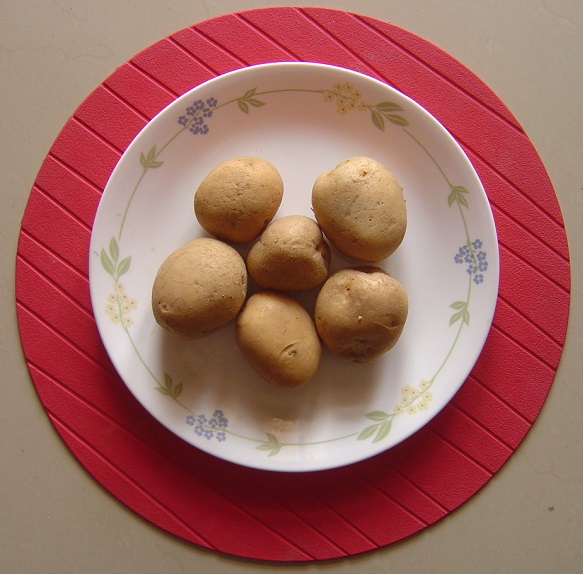
Keep the ingredients cleaned and handy.


Step 2 :
Make a “V” with a sharp knife and cut along the middle of the Shimla Mirch (Capsicum), separating the Shimla Mirch in two parts. You will know the importance of this V Cut , as you make them. Remove only the seeds and do not touch any other portion . You can use the Crochet needle , which is available for Rs 10 at any fancy and novelty shop. The Shimla Mirch without seeds has the much needed strength , when subjected to steam . Please keep this in mind. Store them in pairs, as they are cut.


Step 3 :
Mix a small amount of cooking oil and salt in a small container . Smear the Shimla Mirch all-round  with this , which will enable the Shimla Mirch to absorb the salt.

Step 4 :
Steam the potatoes and green peas separately in a pressure cooker for 3 whistles. Peel and mash the Potatoes into a fine dough with a little refined cooking oil and keep it aside for a few minutes.  Now heat a kadai and add cooking oil. In any usual method convenient to you , you can prepare the masala with Chilly Powder, Red Capsicum, Little Asafoetida , Jeera , Ginger, Curry Leaves and salt. When ready , add the Potato dough . Keeping the flame under simmer , heat the potato and the masala to a good consistency free from water. If you feel , you can add one lime juice and turn the stuffing , after the stuffing is cooled.  


Step 5 :
We are going to use 4 stainless steel small bowls. These square bowls help maintain the Shimla Mirch in vertical position when subjected to steam pressure. Fill both the halves separately with the potato mix and for consolidating you can use  the Chop Sticks , which I normally use. You  should always take Shimla Mirch in pairs. The “V Cut” now will help you to position the two halves properly .


Step 6 :
Now , keep the Shimla Mirch , positioning each of them carefully over the small square bowl to keep them vertical and stable during steaming. You can also use a small circular bowl as shown above for giving support to the Shimla Mirch. Use the pressure cooker with sufficient water below . You can wait upto 2 whistles for the cooking , since the potato is already cooked. Allow 10 minutes for cooling inside the pressure cooker. Take out the stuffing carefully and organise with the base bowl.


Step 7 :
The  Cooked Shimla-Mirch-Aloo can be served in the same square bowls. 


I have seen children eating the stuffing with a spoon and enjoying , holding the square bowl in their hands. I hope you are enjoying this methodology. This method demands concentration .


Rangarajan Ramaswamy Bangalore  06.04.2013 

Friday, 5 April 2013

Vazhai Thandu Raita


Vazhaithandu is an excellent vegetable. It has many nutritive and health benefits. It is a rich source of dietary fiber and minerals like potassium. It is also rich in Vitamin B6, which helps in production of hemoglobin. The veggie also helps lower blood pressure and also aids weight loss. Even the water that  the fresh pieces of Vazhaithandu is soaked in can be used as a refreshing and healthy drink.

My family loves having Vazhaithandu curry and raita. I am sharing with you the recipe along the photos to give you a step-by-step glimpse of the curry and raita preparation . For those who love Raitas , here is a recipe worth trying. I am supplementing the steps with images for understanding the simple steps with visual impact. I hope you will enjoy.

Ingredients
Quantity
Vazhaithandu
_
Half piece
Ginger         
_
Small piece
Curry Leaves
_
6 to 8
Coconut pieces
_
quarter coconut
Green Chillies
_
2 to 3 Nos
Curd
_
250 ml approx
Jeera
_
10 ml
Salt
_
to taste


Step 1: 
Slice 2-3 millimetres from each sides of the banana stem. Mark the portion which you want to use for the day’s cooking. Remove the sheath till the portion which you want to use for the cooking.


Step 2: 
Slice discs from 3 to 4 mm thickness approx. And group them 4 or 5 discs together. Make the cuts in one direction and then cross wise as shown. 


Step 3:
Fill a vessel with 200 ml of water and add 100ml of butter milk. The addition of buttermilk helps prevent discoloration of the banana stem pieces. Now add all the cut pieces  to this buttermilk water. Let it soak for a while.


Step 4:
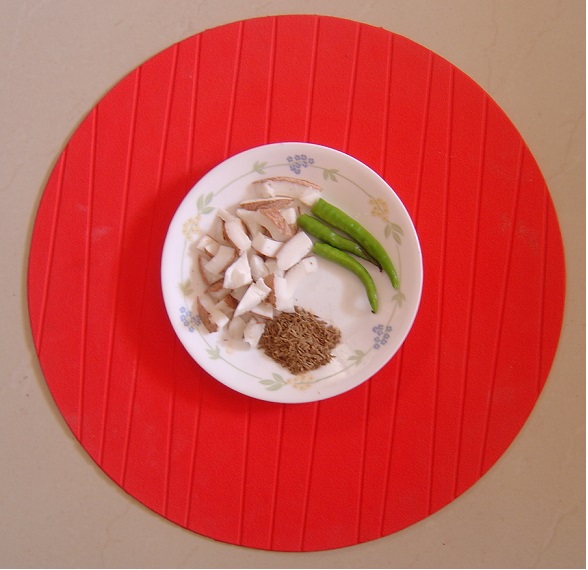
Cut small pieces of the coconut suitable for the mixer grinder. Clean the Green chillies before adding into the mixer. Add 10 ml of jeera to the mix. 

Step 5:
Grind the ingredients in a mixer. Add a small quantity of water just enough for grinding. After the grinding , clean the inside of the lid with small quantity of water and pour the mixer back into the contents . This will avoid the wastage.


Step 6:
Decant the banana stem pieces and separately keep the liquid and the banana stem pieces.

Step 7:
Transfer the banana stem pieces and the contents from the mixer to a cleaned kadai. Cook the contents adding water and covering with the lid. Open the lid a couple of times , adding more water if necessary and turning the contents . Test a single piece by pressing between your fingers and the softness indicates the mixture is cooked . Heat the mixture in a simmer mode till the first bubbles appear , adding salt as per taste.


Step 8:
Turn off the heat and now add about 250 ml of curd .   


Step 9:
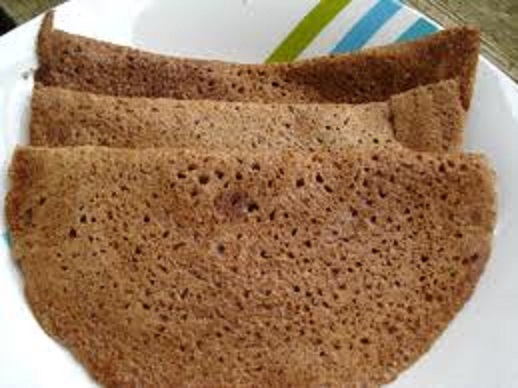
After the contents have cooled , turn the banana stem pieces and mix the contents evenly. At the end , add 6 to 7 curry leaves. The Vazhaithandu Raita goes well with ragi dosas or any any other dosas as a side dish. 


Step 10:
Add a pinch of salt to the decanted Vazhaithandu-buttermilk-water  and enjoy the drink 2 to 3 hours after the food.  If you enjoy the refreshing taste, you can contact me. I will tell you more.

Rangarajan Ramaswamy   Bangalore 05.04.2013  03:00 pm